
Grand Canyon National Park, Arizona: Complete Visitor Guide
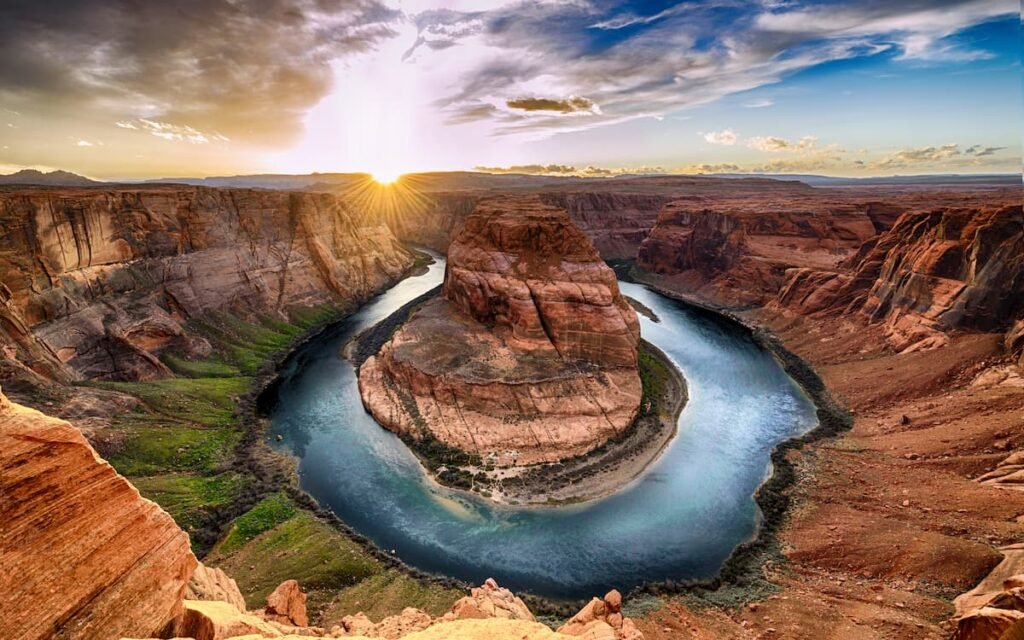
Grand Canyon National Park is one of the most recognizable landscapes in the United States. Carved by the Colorado River across immense layers of rock, the canyon stretches for hundreds of miles and reaches depths of more than a mile. Most first-time visitors explore the South Rim, where viewpoints, trails, visitor facilities and shuttle routes make the park relatively easy to experience.
Grand Canyon at a glance
- State: Arizona
- Main areas: South Rim and North Rim
- Best known for: enormous canyon views, geology, hiking and sunrise/sunset
- Best for: scenic drives, photography, hiking, camping and stargazing
Why the Grand Canyon is special
The canyon exposes nearly two billion years of geological history in its rock layers. The Colorado River continues to shape the landscape at the bottom, while the rims sit thousands of feet higher and support forests, wildlife and dramatically different climates.
The South Rim is open year-round and receives the majority of visitors. The North Rim is higher, quieter and seasonal, typically closing during winter because of snow.
Best viewpoints on the South Rim
Mather Point is one of the easiest viewpoints to reach from the main visitor center. Yavapai Point offers broad views and access to geological interpretation. Along Hermit Road, stops such as Hopi Point and Mohave Point are especially popular around sunset.
The Desert View area at the eastern end of the South Rim combines wide canyon views with the historic Desert View Watchtower. It is worth including if you have a car and enough time.
Hiking below the rim
The Bright Angel Trail and South Kaibab Trail are the two most famous routes descending into the canyon from the South Rim. Even a short descent provides a completely different perspective, but hikers must remember that every step down must later be climbed back up.
Summer heat inside the canyon can be extreme. Day hikers should avoid attempting to reach the Colorado River and return to the rim in a single day unless they are exceptionally experienced and conditions are suitable. Carry water, food and sun protection, and turn around earlier than you think necessary.
Getting around
Free shuttle buses operate on key South Rim routes during much of the year, reducing congestion and simplifying access to viewpoints and trailheads. Some roads are closed to private vehicles during busy periods, making the shuttle system essential rather than optional.
If you are staying overnight, the Grand Canyon Village area allows you to combine walking and shuttles without moving your car repeatedly.
Sunrise, sunset and stargazing
Light changes the canyon constantly. Sunrise produces cooler temperatures and quieter viewpoints, while sunset often brings strong color to the upper cliffs. Arrive early at popular viewpoints because parking and shuttle demand can build quickly.
The park is also an International Dark Sky Park. On clear nights, the combination of elevation and limited artificial light can make stargazing exceptional.
Camping and lodging
Lodging is available inside Grand Canyon Village and at other locations near the South Rim, but rooms can sell out months in advance. Campgrounds also fill quickly during peak travel periods. The North Rim has fewer options and a shorter operating season.
Best time to visit
Spring and fall are excellent for hiking and sightseeing because temperatures are generally more comfortable. Summer brings the largest crowds and intense heat below the rim. Winter can be beautiful and much quieter on the South Rim, but snow and ice may affect roads and trails.
Safety tips
- Do not underestimate heat or elevation.
- Carry more water than you expect to need when hiking.
- Stay behind railings and away from unstable edges.
- Use traction devices when winter trails are icy.
- Do not feed wildlife.
- Check current shuttle routes and trail conditions before setting out.
Interesting facts
The canyon is not the world’s deepest. Its importance comes from its extraordinary scale, exposed geology and dramatic combination of width, depth and length.
People have lived in and around the canyon for thousands of years. The landscape remains culturally significant to several Indigenous nations.
Temperatures can differ enormously between rim and river. It may feel cool at the top while conditions deep inside the canyon are dangerously hot.
Is Grand Canyon National Park worth visiting?
Yes. Even visitors who have seen countless photographs are often surprised by the scale of the canyon in person. A half-day visit can cover major viewpoints, but two or three days allow time for hiking, sunrise or sunset, Desert View and a slower pace.
For current entrance information, shuttle schedules, closures and trail conditions, visit the official Grand Canyon National Park website.

