
Hawaiʻi Volcanoes National Park, Hawaii: Complete Visitor Guide
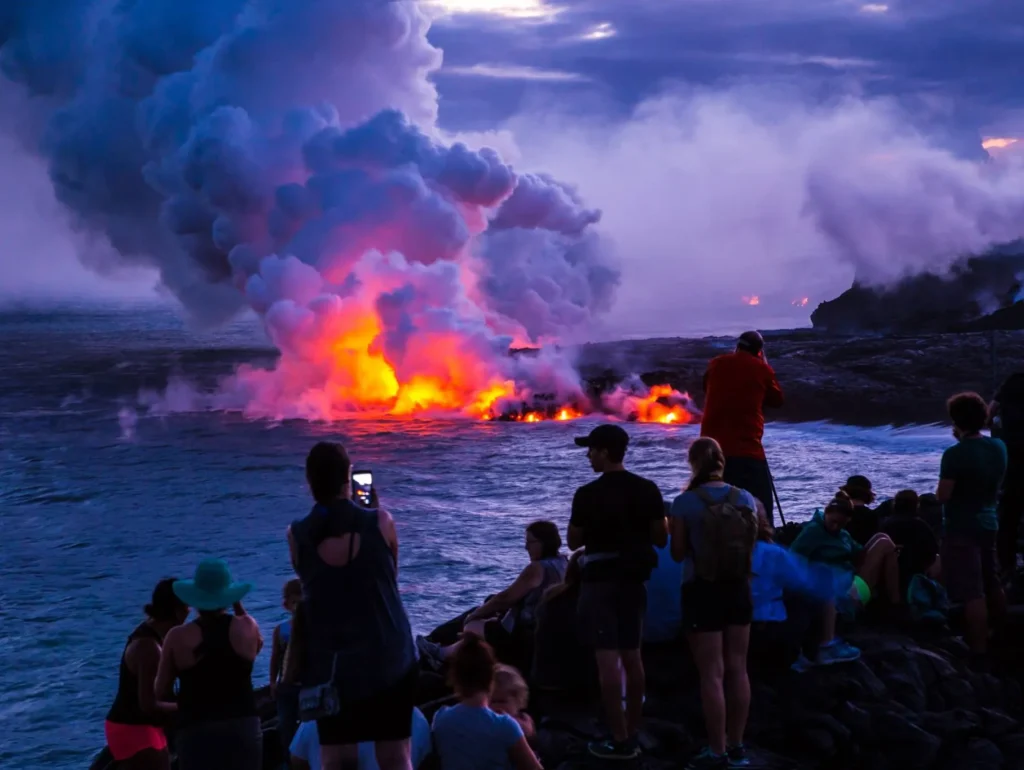
Hawaiʻi Volcanoes National Park protects one of the most dynamic volcanic landscapes in the world. Located on the Island of Hawaiʻi, the park includes the summit region of Kīlauea, vast lava fields, rainforest, desert-like terrain and the slopes of Mauna Loa. Because volcanic activity changes over time, every visit can be different.
Hawaiʻi Volcanoes at a glance
- Island: Hawaiʻi Island
- Best known for: Kīlauea, lava landscapes and volcanic geology
- Best for: scenic drives, hiking, geology, photography and night viewing
- Main base: Kīlauea summit area near Volcano village
Why the park is special
Kīlauea is one of the world’s most active volcanoes, while Mauna Loa is the largest active volcano on Earth by volume. The park offers a rare opportunity to see landscapes created by eruptions that may be only years or even months old beside older forests growing on ancient lava flows.
The area also has deep cultural significance in Native Hawaiian traditions, particularly in connection with Pele, the deity associated with volcanoes and fire.
Kīlauea summit and crater viewpoints
The summit area is the easiest place to begin. Roads and trails connect overlooks around Kīlauea caldera, where visitors can see enormous collapse features and, when eruptions are active, possible glow or lava activity from designated safe viewpoints.
Volcanic conditions can change rapidly. Never rely on an old itinerary or social media post; check National Park Service alerts on the day of your visit.
Chain of Craters Road
Chain of Craters Road descends from the summit toward the coast through a sequence of lava flows, craters and changing vegetation zones. The route ends near dramatic sea cliffs and the Hōlei Sea Arch area. It is one of the best ways to understand the scale of repeated eruptions without undertaking a long hike.
Hiking
Popular walks include sections of Crater Rim Trail, rainforest routes and trails across older lava landscapes. Kīlauea Iki is one of the park’s classic hikes, descending into a crater that held a dramatic lava lake during the 1959 eruption.
Terrain can be sharp, uneven and exposed. Wear sturdy footwear, carry water and prepare for rapid shifts between rain, wind and strong sun.
Lava viewing
Active lava is never guaranteed. Kīlauea alternates between eruptive episodes and quieter periods, and access changes according to gas levels, ground instability and eruption hazards. When lava is visible, follow official viewing instructions and expect crowds around safe observation areas.
Weather and elevation
The Kīlauea summit sits at roughly 4,000 feet, so temperatures are much cooler than at the beaches. Rain and mist are common. Visitors often arrive in shorts from the coast and are surprised by how cold and wet the park can feel.
Best time to visit
The park is open year-round. Early mornings are generally quieter, while evening visits can be excellent when volcanic glow is visible. Weather varies throughout the year, so the best visit depends more on current volcanic and road conditions than on a single ideal season.
Useful tips
- Check eruption and air-quality alerts immediately before entering the park.
- Bring a rain jacket and warm layer.
- Carry water and sun protection for exposed lava fields.
- Do not enter closed areas; volcanic gases and unstable ground can be deadly.
- Allow a full day if you want both summit areas and Chain of Craters Road.
- Respect culturally sensitive sites and stay on designated routes.
Interesting facts
The park contains two major active volcanoes. Kīlauea and Mauna Loa have both reshaped the island repeatedly in modern times.
Fresh lava eventually becomes new habitat. Plants gradually colonize barren flows, creating visible stages of ecological succession.
Kīlauea’s summit changed dramatically in 2018. A major eruption and summit collapse greatly enlarged the caldera and altered roads and viewpoints.
Is Hawaiʻi Volcanoes National Park worth visiting?
Absolutely. It is one of the most unusual national parks in the country and a highlight of Hawaiʻi Island even when no lava is visible. The combination of geology, living Hawaiian culture and constantly changing terrain makes repeated visits worthwhile.
For current eruption status, closures, air quality and trail conditions, visit the official Hawaiʻi Volcanoes National Park website.

