
White Sands National Park, New Mexico: Complete Visitor Guide
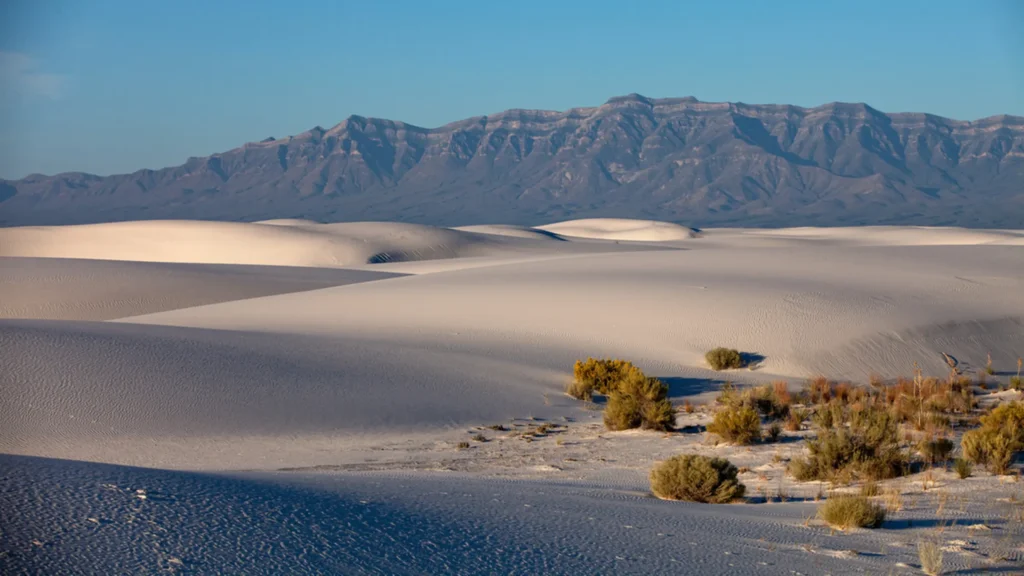
White Sands National Park protects one of the most unusual landscapes in the United States: vast fields of brilliant white gypsum dunes rising from New Mexico’s Tularosa Basin.
The greater dunefield covers about 275 square miles and is the largest gypsum dunefield on Earth. The park preserves a major portion of it, creating an almost snow-like desert landscape surrounded by distant mountains.
White Sands at a glance
- Location: southern New Mexico
- Best for: dunes, photography, hiking, sledding and sunsets
- Landscape: gypsum sand dunes
- National park status: since 2019
Driving the dunes
Dunes Drive leads from the visitor area into the heart of the white landscape. As the road progresses, pavement gives way to a hard-packed gypsum surface and the scenery becomes increasingly dramatic.
Road closures can occur because the park is adjacent to an active missile range, so checking current conditions before arrival is important.
Hiking and sand sledding
Several marked trails offer different levels of difficulty, from short interpretive walks to more demanding dune routes. Because dunes constantly shift, navigation can be more difficult than the open landscape suggests.
Sand sledding is one of the park’s signature activities. Visitors typically use waxed plastic sleds on suitable dunes while avoiding vegetation.
Sunset and photography
Late afternoon is one of the best times to visit. The white gypsum reflects changing colors from the sky, and shadows create texture across the dunes. Bright midday conditions can be harsh for both photography and hiking.
Desert safety
Despite the pale surface, White Sands is still a desert environment. Summer heat can be intense, shade is limited and dehydration can develop quickly. Carry plenty of water, use sun protection and avoid wandering away from marked routes without preparation.
Best time to visit
Fall through spring generally provides the most comfortable temperatures. Summer can still be rewarding if you visit early or late in the day and plan around heat and thunderstorms.
Practical tips
- Check park closures before driving from a long distance.
- Carry more water than you think you need.
- Protect cameras and electronics from fine sand.
- Keep track of your route in open dune areas.
- Stay for sunset if conditions allow.
Is White Sands worth visiting?
Absolutely. Few national parks offer a landscape this visually distinctive, and even a short visit can feel unlike anywhere else in the Southwest.
Official information
For current hours, closures, fees and safety information, visit the official National Park Service website.

