
Congaree National Park, South Carolina: Complete Visitor Guide
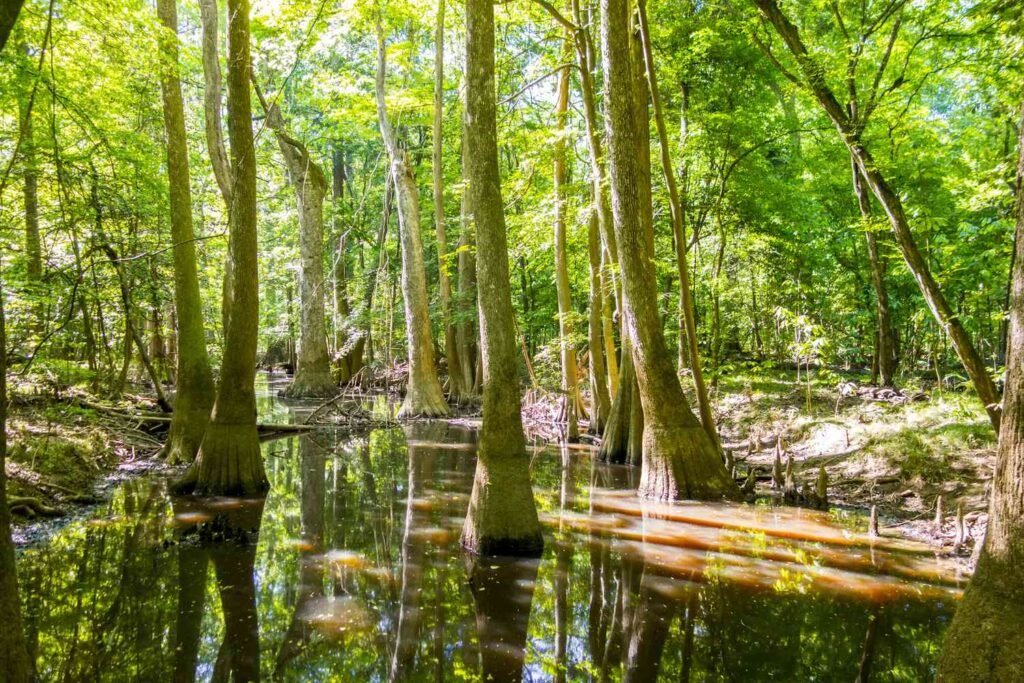
Congaree National Park protects one of the most remarkable old-growth bottomland hardwood forests in the southeastern United States. Located near Columbia, South Carolina, the park is known for enormous trees, floodplain scenery, elevated boardwalks and quiet waterways that can be explored on foot or by canoe and kayak.
Unlike mountain or desert parks, Congaree is shaped by water. Seasonal flooding nourishes the forest and creates a constantly changing landscape.
Congaree National Park at a glance
- Location: near Hopkins and Columbia, South Carolina
- Best for: boardwalk walks, forest hiking, paddling, birding and photography
- Main landscape: old-growth bottomland forest and floodplain
- Entrance: fee-free
Why visit Congaree?
The park contains some of the tallest trees in the eastern United States and preserves a rare ecosystem that once covered much larger areas of the Southeast. The combination of giant hardwoods, cypress knees and dark-water channels gives the park a distinctive atmosphere.
Boardwalk and hiking
The Boardwalk Loop is the easiest introduction to Congaree. Elevated sections allow visitors to walk through wet forest without needing backcountry equipment. Longer trails extend deeper into the floodplain and can become muddy or flooded depending on water levels.
Because conditions change quickly, checking current trail and river information before arrival is especially important here.
Canoeing and kayaking
Cedar Creek is one of the park’s signature experiences. Paddling through the forest offers a completely different perspective from hiking and can be excellent for wildlife watching. Water levels, fallen trees and navigation conditions vary, so paddlers should prepare carefully.
Wildlife and insects
Visitors may see deer, wild turkey, turtles, barred owls and a wide variety of other birds. Mosquitoes and other insects can be intense in warm months, making repellent an essential item.
Best time to visit
Spring and fall usually offer the most comfortable temperatures. Summer is hot, humid and buggy, while winter can be pleasant and quiet. Flooding can occur at any time after heavy rain upstream.
Practical tips
- Check river and flood conditions before hiking.
- Bring insect repellent in warm weather.
- Carry water even on boardwalk routes.
- Do not rely on strong cell service in the backcountry.
- Tell someone your route if paddling or hiking remotely.
Is Congaree National Park worth visiting?
Yes. It offers a unique national park experience centered on forest, water and biodiversity rather than dramatic elevation, and it is particularly rewarding for visitors who enjoy quiet natural landscapes.
Official information
For current water levels, trail alerts, hours and visitor information, visit the official National Park Service website.

